
Game 2 of the World Chess Championship 2026 was over in under two hours. Champion D. Gukesh had the white pieces for the first time in the match and chose the London System, a quiet, solid opening that many club players use. Challenger Javokhir Sindarov was well prepared, the position stayed balanced, and the players repeated moves on move 20. The match is level at 1–1 after two draws.
A short draw can look like nothing happened, but Game 2 was full of match strategy. This review explains why Gukesh picked the London, what Sindarov's early queen move was about, why one pawn move cost the champion half an hour, and why both players were happy to shake hands. If you missed the first game, start with our Game 1 review, and for the format and schedule see our guide to the FIDE World Chess Championship 2026.
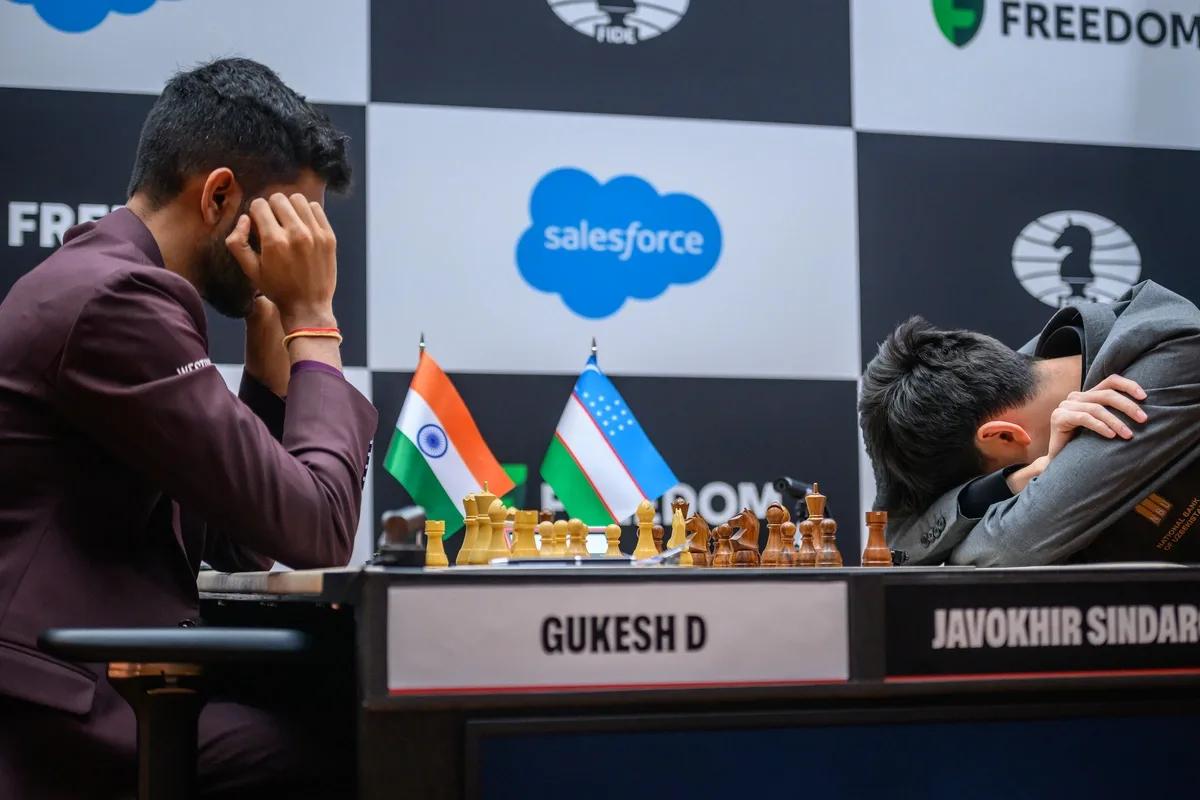
The surprise: Gukesh plays the London System
The London System starts with 1.d4 and an early Bf4, and White builds the same solid set-up against almost anything: pawns on d4, e3 and c3, knights on f3 and d2, bishop to d3, castle short. It is popular from club level to the world's top players because it is easy to learn and hard to break. It is also a little unusual in a World Championship, where players normally prepare the sharpest lines they can find.
So why did Gukesh play it? GM Peter Svidler, commentating for FIDE, saw it as an exploratory choice by Gukesh's team: a safe way to find out what Sindarov had prepared for White's first-move options, while giving little away. It was not completely new to Gukesh either. As ANI pointed out, Ding Liren played the London against him twice in their 2024 title match, in Games 6 and 10, and both games were drawn.
Sindarov was not surprised for long. Reports say he played his opening moves quickly, a sure sign he had looked at the London before the match. After the game he admitted it was the opening he expected least in his first game with Black.
Sindarov's answer: 7...Qb6
According to Gazeta.uz, Gukesh placed a knight on e5 on move 7 instead of trading pieces straight away, and Sindarov replied with 7...Qb6. This queen move is one of the most important ideas to know against the London, and students meet it early.
Here is the idea. In the London, White's dark-squared bishop leaves c1 very early to go to f4. That bishop was the piece guarding the b2 pawn. Black's queen on b6, often helped by a pawn on c5, attacks b2 and puts pressure on d4 at the same time. White has to spend a move defending, usually with Qb3 or Qc1 or a careful pawn move, and that lost time is exactly what Black wants. In Game 2, Gazeta noted, the queen move took the edge off White's attacking plans. A few moves later, on move 11, Sindarov even brought the queen back to d8, having made White adjust.
The key moment: 15...f5 and the 30-minute think
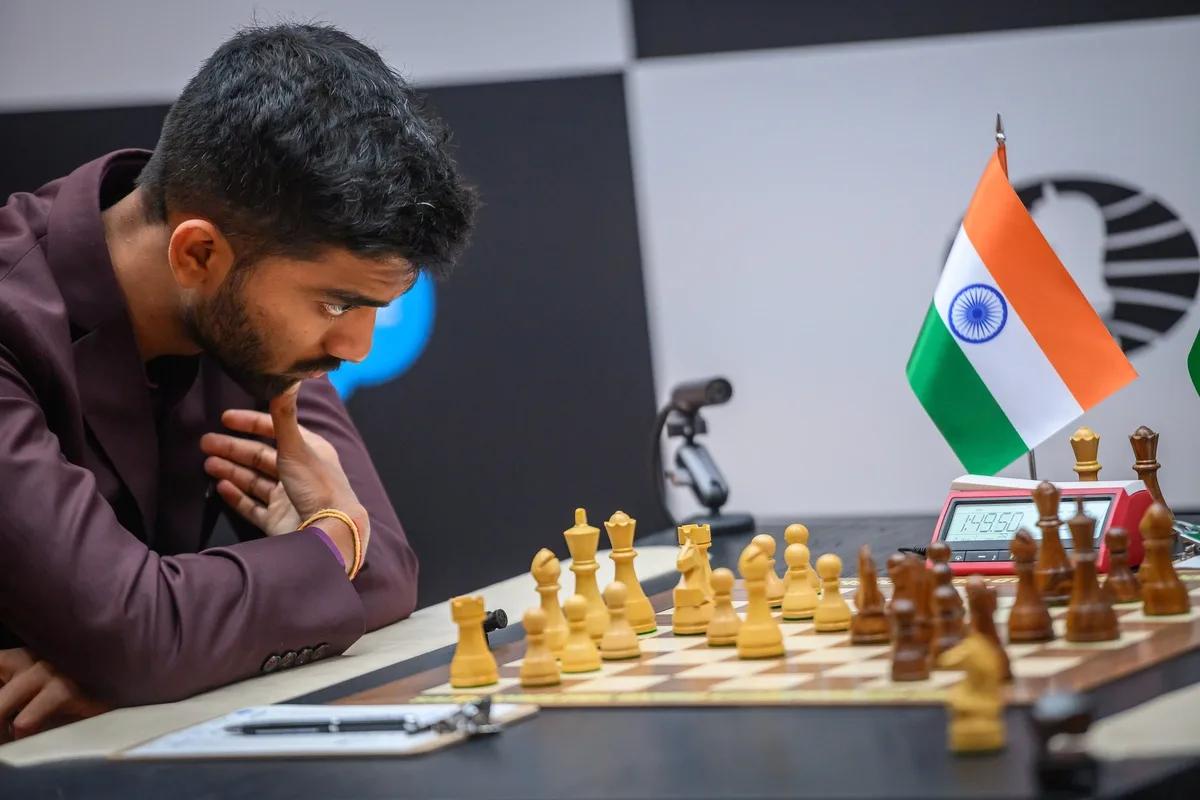
Gukesh tried to make something of the queenside with 10.a4, but the game only came alive on move 15. Sindarov played 15...f5, a bold pawn push that grabbed space on the kingside. One idea behind it was to bring a knight from f6 to the strong e4 square, where it would be hard to remove.
Gukesh thought for about 30 minutes before answering with 16.f3. The pawn on f3 covers e4, so Black's knight can no longer land there. It is a typical positional decision: instead of allowing a strong piece onto an outpost, you take the square away before the piece arrives. The commentators noted that during that long think Gukesh did not find a concrete way to an advantage, and by then he was about 35 minutes behind on the clock, according to ESPN.
This is a lesson every student can use. An outpost is a square in or near the opponent's half where your piece cannot be chased away by a pawn. Knights love outposts. When you see your opponent's knight heading for one, ask: can I control that square with a pawn first? Gukesh's 16.f3 is a clear example. Our guide to chess tactics like forks, pins and skewers shows why a knight on a strong square is so dangerous.
Why the game ended on move 20
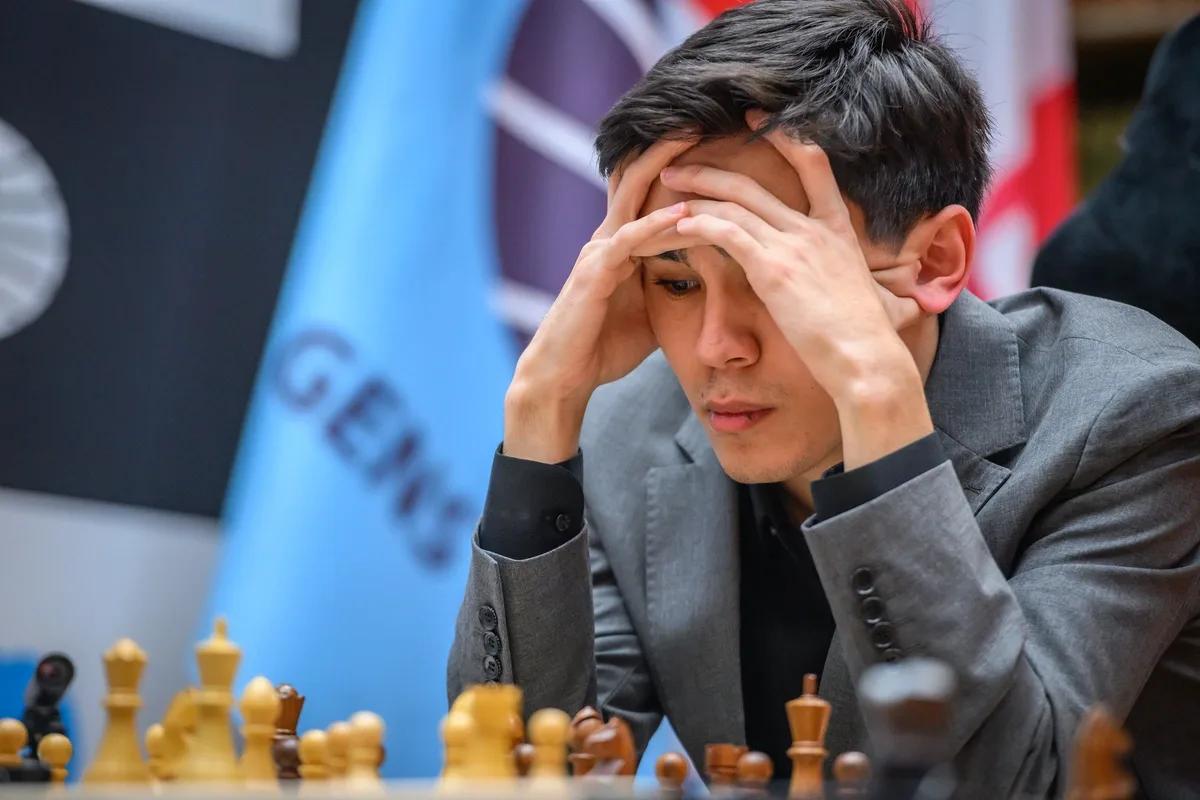
After 16.f3, neither side found a way to make progress without taking a big risk. A bishop and a knight began moving back and forth between the same squares, and when the same position appeared for the third time, the game was drawn by threefold repetition on move 20, with most of the pieces still on the board. According to ESPN and Gazeta, Sindarov called the arbiter to claim the draw. This time, unlike the wrong claim in Game 1, it was done correctly.
Why would a World Champion agree to a draw so quickly with the white pieces? In a 14-game match, every game is a small part of a long plan. Gukesh was already behind on the clock, the position offered him nothing clear, and a risky try could have backfired. Taking a safe draw keeps the score level and saves energy for the games where he feels his preparation is stronger. ESPN noted the contrast with 2024, when Gukesh was much keener to play on in level positions.
What the players and experts said
- Sindarov said the London was the opening he least expected, and that he was pleased with Black: "I'm happy that I pretty equalised the game," he told the press conference (via Gazeta.uz). He added that he sees nothing wrong with the London and would even recommend it to beginners who start with 1.d4.
- Gukesh said he did not get much out of the opening and called it a fine game. He also defended the London, saying he does not understand why it gets so much criticism.
- Peter Svidler, on the FIDE broadcast, described the London as a scouting choice: it gave Gukesh little on the board, but his team learned something about Sindarov's preparation.
Our analysis: where the match stands after two games
Two games, two draws, and two clear patterns. Sindarov's preparation looks excellent. He pressed with White in Game 1 and was never in danger with Black in Game 2, playing his opening moves quickly both times. Gukesh is spending more time on the clock. In both games he fell well behind early, by about half an hour or more. So far his defence has held, but time trouble is where mistakes happen, and it is the thing to watch in the coming games.
On the other hand, Gukesh has now held the higher-rated challenger with Black and kept his own White game completely safe. In a match, a level score after the first White game is not a bad start. Our view before the match was that it is anybody's game, and our World Chess Championship 2026 predictions still stand. Game 3, with Sindarov playing White again, is the last one before the first rest day, so expect both players to give everything.
Three lessons for students from Game 2
- A simple opening can be a strong opening. The London follows the same plan against almost everything, which is why many coaches teach it to players starting with 1.d4. Both World Championship players defended it after the game.
- Watch for ...Qb6 against an early Bf4. When a bishop leaves its home square, check which pawns it was protecting. Here it was b2.
- Take squares away before pieces reach them. Gukesh's 16.f3 stopped a knight from landing on e4. Controlling an outpost with a pawn is often better than trying to chase the piece away later.
Envision students can try the London, or the ...Qb6 answer to it, in our regular online chess tournaments for students, and ask their coach about Game 2 in their next class.
What's next: Game 3
Game 3 is on Thursday, 26 November, at 7:30 pm IST (3:00 pm in Geneva), and Sindarov has White again. It is the last game before the first rest day on 27 November. After that, Gukesh has White in Game 4 on Saturday, 28 November. We will review every game here on the blog.
Frequently asked questions
Who won Game 2 of the World Chess Championship 2026?
Nobody. Game 2 between D. Gukesh (White) and Javokhir Sindarov (Black) on 25 November 2026 was drawn by threefold repetition after 20 moves. The match is level at 1–1.
What opening did Gukesh play in Game 2?
The London System, an opening built on 1.d4 and an early Bf4. Sindarov answered with the well-known idea 7...Qb6, which attacks the b2 pawn.
Why was Game 2 so short?
After Sindarov's 15...f5 and Gukesh's 16.f3, neither player saw a safe way to make progress. The pieces repeated their moves and the game was drawn by threefold repetition on move 20, in under two hours.
Is the London System good for beginners?
Many coaches think so, because White can use the same set-up against almost any defence and learn plans instead of long lines. Both Gukesh and Sindarov defended the opening after Game 2, and Sindarov said he would recommend it to beginners who play 1.d4.
When is Game 3 of the World Chess Championship 2026?
Game 3 is on Thursday, 26 November 2026, at 7:30 pm IST (3:00 pm in Geneva). Sindarov plays White. 27 November is a rest day.