
A real curriculum, not ad-hoc lessons
Five stages, fifteen levels and 240 taught sessions, from the first move through to Masters. Every level is sixteen sessions across two months.
Masters Stage · 48 Sessions
High-performance chess training for ambitious rated players. 48 live sessions on the positional understanding that separates strong players - pawn structure, weak squares, attacking schemes and deep endgame theory.

Why Envision
Not a set of loose classes. A structured path, a coach who knows where your child is, and a portal that shows you the progress.
Five stages, fifteen levels and 240 taught sessions, from the first move through to Masters. Every level is sixteen sessions across two months.
A free assessment with a coach places them at the exact session to begin from, rather than a generic beginner slot.
Live classes, homework, tournaments, coach feedback, progress reports, invoices and payments behind a single login.
Coaches review submitted homework and answer questions between classes, so nothing waits until the next session.
Weekly academy tournaments with real pairings, live games, results and leaderboards - not just practice games.
Attendance, assignment scores, tournament results and fee history are visible to parents, not only to the student.
Full Curriculum
This is the actual syllabus a coach teaches from - not a summary. 48 sessions, 3 levels, in the order they are taught. Every session is live, online for students anywhere in India and offline at our four Kolkata centres.
Masters · Level 1
Positional foundations: the seventh rank, line blocking, outposts and underpromotion, then exploiting weaknesses, fortresses, weak points and open files.
Masters · Level 2
Pawn structure as a whole discipline - isolated, doubled, backward, hanging and passed pawns, pawn islands - alongside queen sacrifices and attacking the king by typical mates and target points.
Masters · Level 3
Attacking schemes by piece pair, then king and pawn technique at theoretical depth: shouldering, the active king, king routes, outside and protected passed pawns, breakthrough and same-colour bishop endings.
Student Results
Students who trained through the Envision syllabus, of which the masters course is one stage.
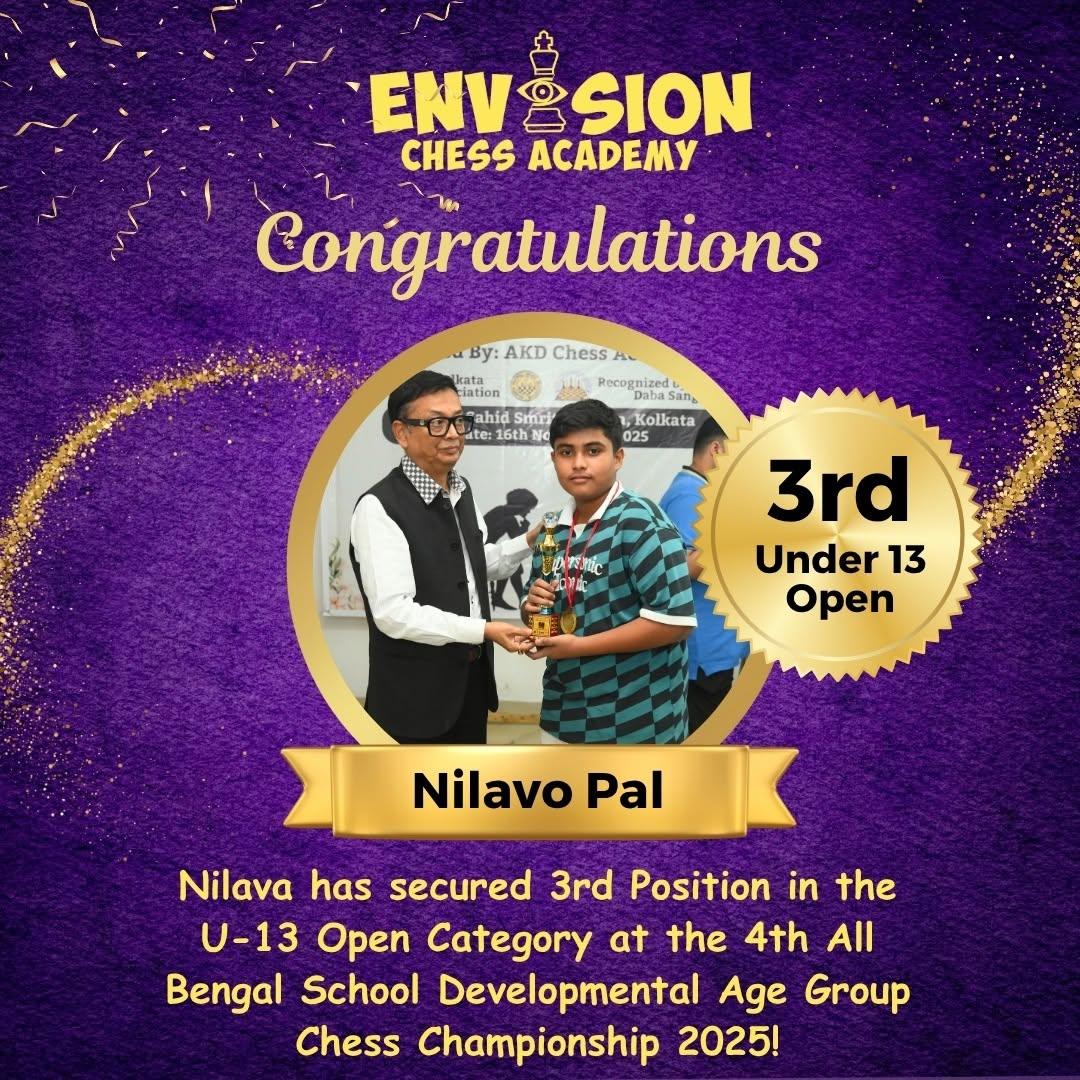
3rd in U-13 Open Category
4th All Bengal School Developmental Age Group Chess Championship 2025 · 2025 · State level
Story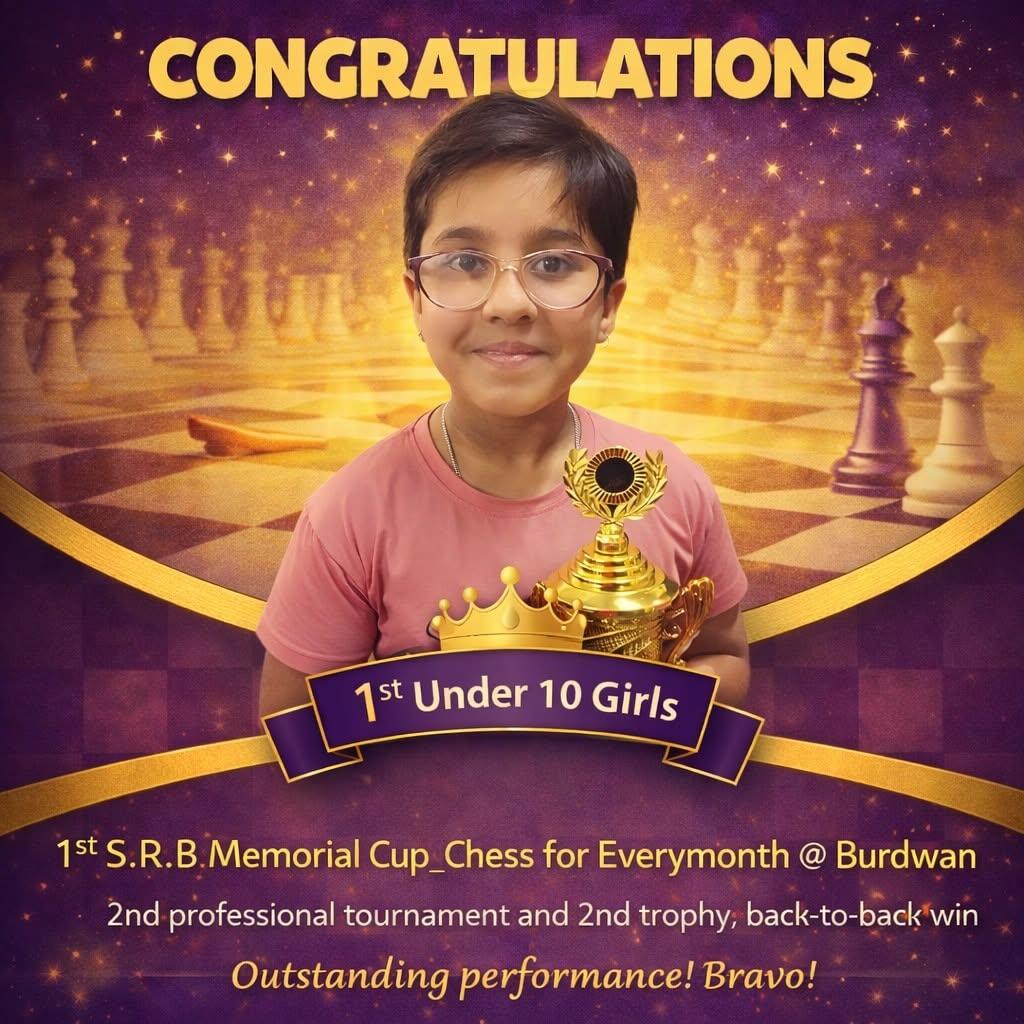
1st Under 10 Girls; second professional tournament and second trophy
1st S.R.B. Memorial Cup Chess for Everymonth · District level
Story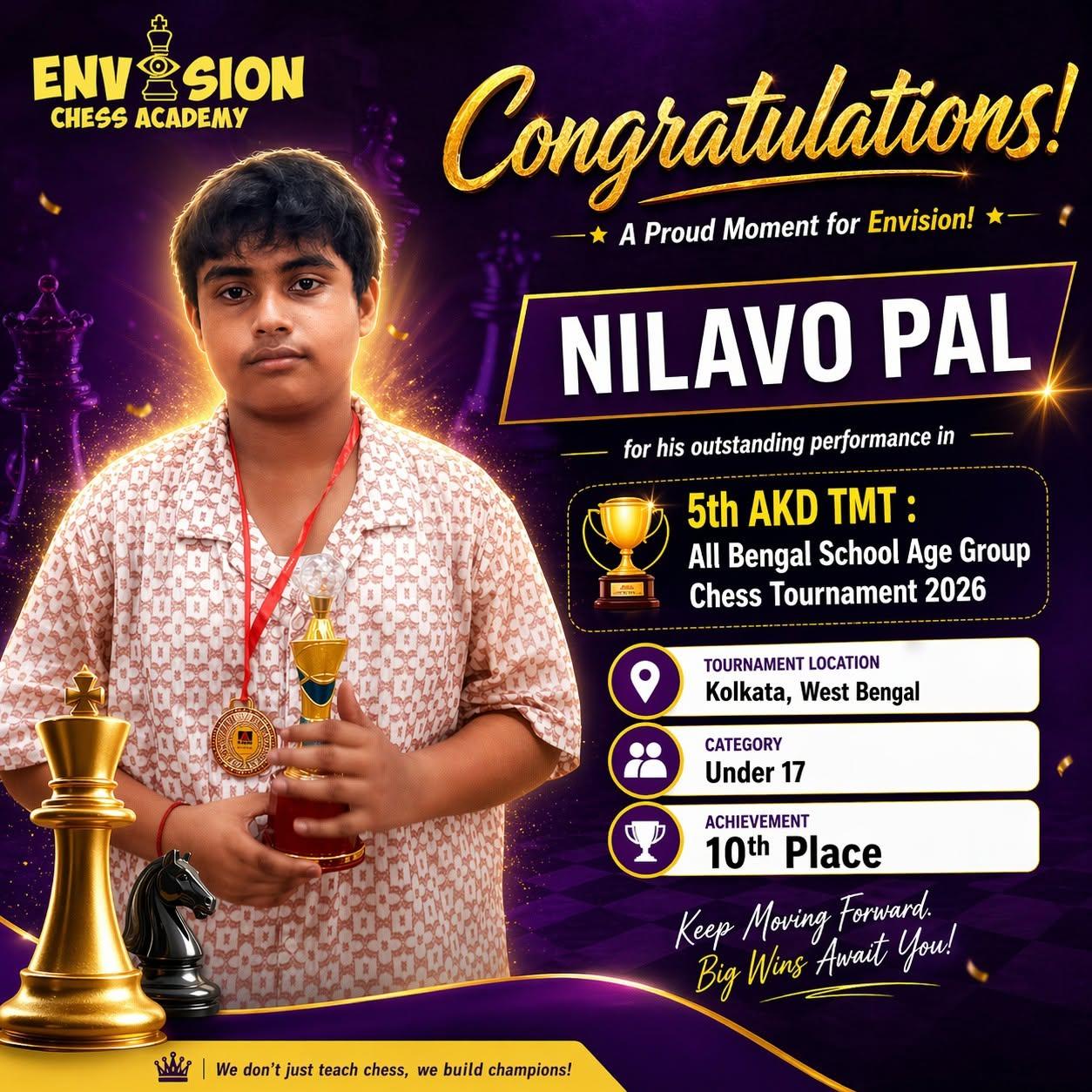
10th Place in Under 17
5th AKD TMT All Bengal School Age Group Chess Tournament 2026 · 2026 · State level
Story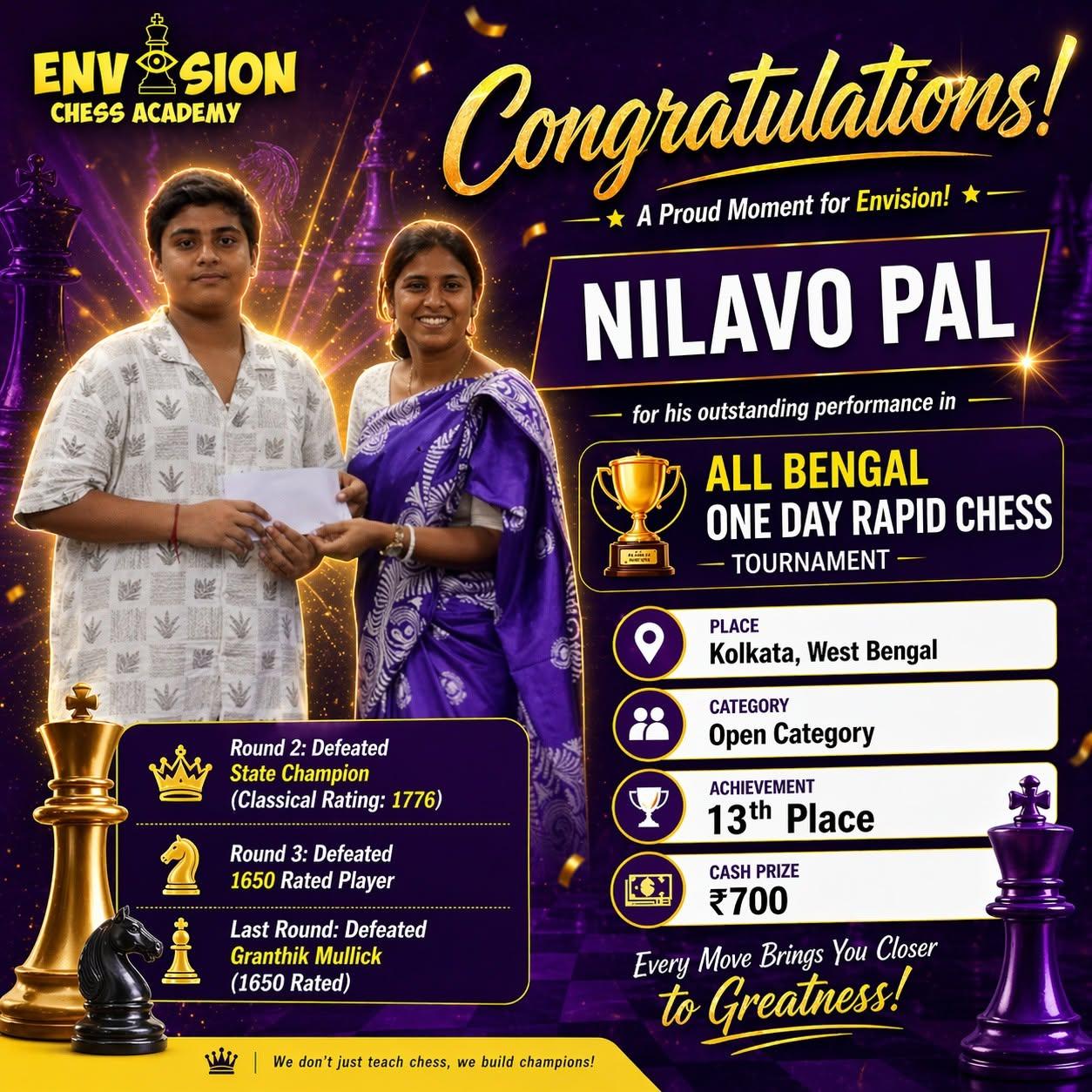
13th Place in Open Category; cash prize Rs 700
All Bengal One Day Rapid Chess Tournament · State level
StoryQuestions
A competitive player who already calculates well and now needs judgement - knowing which structure to aim for, which weakness to attack and which endgame to steer into. It assumes the Pro stage, or equivalent strength, is already behind you.
At this level coaching stops being about learning motifs and becomes about understanding positions. The Masters syllabus is built around pawn structure, weak squares, attacking schemes and theoretical endgames rather than puzzle patterns.
Through an assessment class rather than direct enrolment. A coach reviews the player's current standard and recommends whether Masters is the right stage, or which earlier session to start from instead.
Yes, it is aimed at rated and competitive players. The material - hanging pawns, fortresses, target points, the outside passed pawn, same-colour bishop endings - is the sort that decides games between players who both already know the tactics.
Yes. The second half of Level 3 is theoretical endgame work: shouldering, the active king, king routes, outside and protected passed pawns, breakthrough and same-colour bishop endings.
Opening repertoire is taught earlier in the ladder, in the Advanced (Semi Pro) stage. The Masters Course is positional and endgame work, and assumes a repertoire is already in place.
It targets the areas games are decided by once both players see the tactics. Rating depends on the player and how often they compete, so no course can promise a number, but the syllabus is built for competitive rather than casual play.
Yes. Students can be placed in a group batch or in one-to-one coaching, and the assessment covers which format suits the player.
Start with a free assessment
A coach assesses your child in the demo class and tells you exactly which session to start from. No obligation, online or at a Kolkata centre.